
The Heel Turn of LeBron James

Share
For as “fake” as many accuse pro wrestling of being, it seems to have a knack for revealing the truth.
It understands that fame and fortune can turn people into the worst versions of themselves. Most of all, it understands that there is no heel quite like the beloved champion who turned his back on the very people who made him.
In wrestling, a “heel” is the bad guy. The most memorable heels, however, don't suddenly become bad. They take the very qualities fans once admired and twist them into something cold, arrogant, and self-serving.
Hollywood has a way of doing that to heroes.
Look at Hulk Hogan. During his peak Hulkamania run in the 1980s, Hogan was practically a walking monument of Reagan-era Americana. He waved the flag, told kids to say their prayers and take their vitamins, and strutted into arenas dressed in red and yellow while “Real American,” one of the most patriotic songs ever made, blared over the speakers.
Then, in 1996, he turned heel.
He rechristened himself “Hollywood” Hulk Hogan. He dyed his beard black, traded the yellow trunks for black tights, and ushered in pro wrestling’s version of the Rashidun Caliphate, the New World Order. The heel turn worked because Hogan was not a completely different person fans were used to. He still had the charisma and over-the-top confidence. It was just a darker, more self-serving version.
Then there was The Rock.
After emerging from the Nation of Domination, he became “The People’s Champ,” armed with a million-dollar grin, a raised eyebrow, and enough charisma to hold “the millions—and millions” of fans in the palm of his hand. But when Hollywood came calling, The People’s Champ morphed into Hollywood Rock: an arrogant heel wearing Versace shirts and designer sunglasses who looked down on the wrestling business that had made him famous.
Hollywood itself underwent the same transformation: a place founded as a Christian refuge from vice became an international playground of indulgence, vanity, and liberal conformity.
The same heel turn happened to LeBron James.
LeBron entered the NBA as the hometown prodigy from Akron, Ohio. The Cleveland Cavaliers drafted him first overall. He carried them to their first NBA Finals appearance. Before he had won a championship, he was already a made man in The Land.
Then came “The Decision.”
When LeBron announced that he was taking his talents to South Beach, he became the biggest villain in American sports practically overnight. But even then, he remained recognizably human. He danced with teammates. He celebrated with fans who hit half-court shots for big paydays. He played with an exuberance that reminded you basketball was first and foremost in his life.
Yes, the drama-king theatrics occasionally surfaced. This is around the time he started flopping all over the court like a soccer player, unbecoming of a six-foot-nine, two-hundred-fifty-pound “King.” But there were still enough glimpses of the kid from Akron to keep him relatable.
His return to Cleveland produced the defining accomplishment of his career.
In 2016, LeBron led the Cavaliers back from a 3-1 deficit against a 73-win Golden State Warriors team, delivering the Cavs their first Larry O’Brien Trophy and Cleveland its first major professional sports championship in 52 years.
Then LeBron went to Los Angeles, and his full Hollywood heel persona emerged.
As a fan of both the Lakers and LeBron, I thought it would be a match made in basketball heaven.
Nope. Egg on my face and crow on my plate.
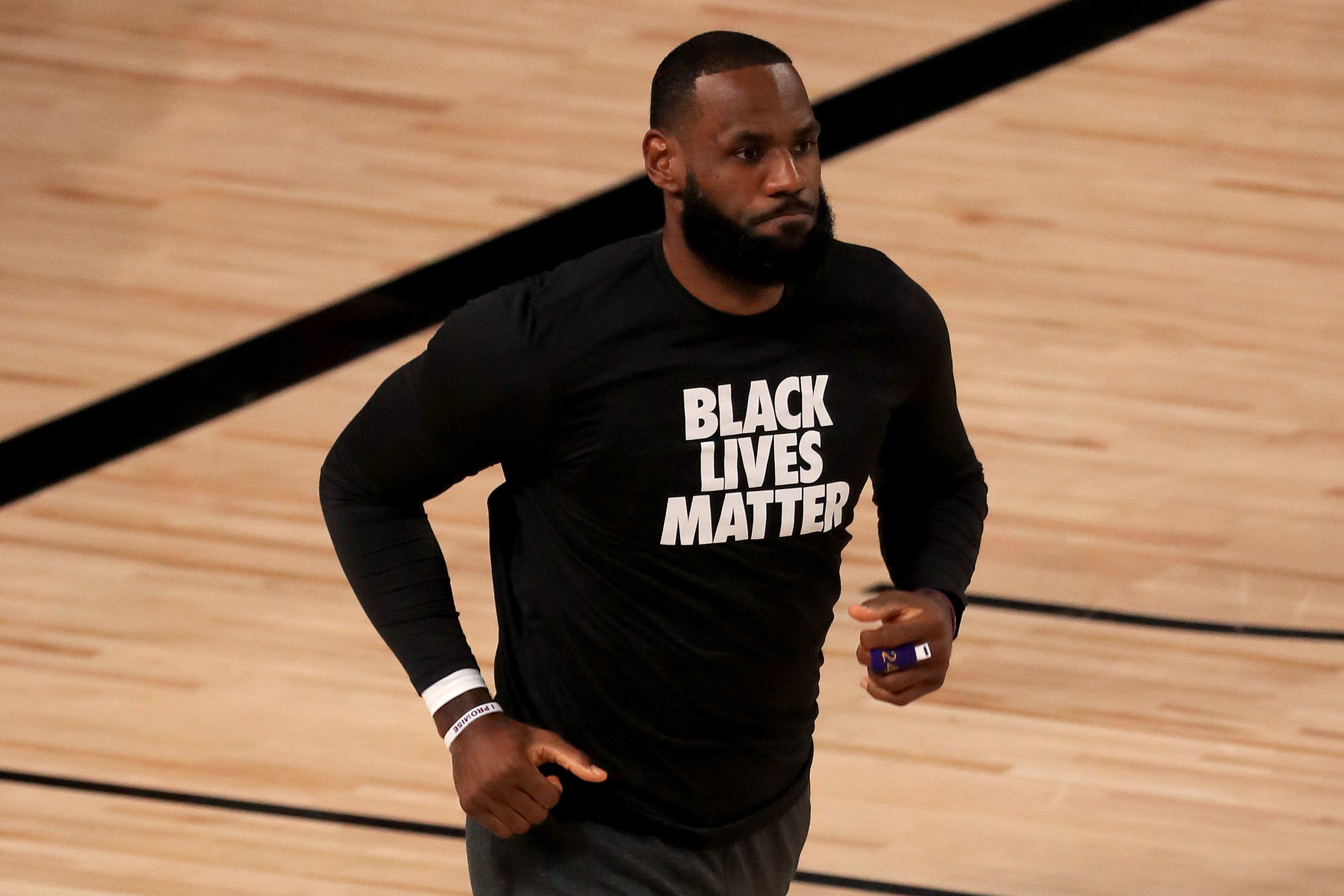
He no longer came off as a joyful basketball player. Along the way, he became a producer, businessman, political spokesman, amateur general manager, and permanent center of attention. LeBron became one of the most unlikeable figures in sports, in part because he started acting less like a person and more like a corporation.
Every cryptic tweet, postgame monologue, public complaint, and slogan-bearing outfit felt calculated to protect or expand the LeBron James brand. Having interests outside of basketball is not the problem. I reckon most athletes do. The issue is everything felt fake and corporate. LeBron Inc. swallowed LeBron James the basketball player.
Heels often reject limits, and LeBron rejected the limits of being a basketball player. The accusations that his agency, Klutch Sports, operated as a shadow front office became so loud that fans started calling him “LeGM.” The Lakers gutted their roster in 2021, trading for an aging Russell Westbrook. “LeGM” approved the trade. His son, Bronny James, who averaged 4.8 points and 2.8 rebounds per game in college, was gifted a Lakers roster spot thanks to “LeGM.”
And then there were the partisan politics.
Athletes are free to speak. Fans are equally free to conclude that their political analysis is shallow, selective, rehearsed, or hypocritical. In LeBron’s case, it was all four. Celebrity status does not equal moral authority, and the ability to sink a 20-foot jump shot does not make someone an expert on public policy. To be fair, Jonathan Isaac of the Orlando Magic has conservative leanings, and I do not particularly care what he has to say about politics either.
There’s nothing wrong with just playing basketball.
Perhaps no modern athlete better exemplifies the transition from hometown hero to snobby, corporate heel than LeBron, whose persona has been re-engineered to exist far outside the basketball court. In short, LeBron bought the lie Hollywood sold him: greatness required becoming bigger than basketball.
This shift started before he signed with the Lakers. LeBron told Sports Illustrated in 2016 that “My motivation is this ghost I’m chasing. The ghost played in Chicago.” According to former NBA player Rashad McCants, LeBron wanted to “make that other No. 23 disappear.”
It was as if LeBron sought to outrun Michael Jordan’s ghost by moving the goalposts entirely, pivoting toward media ventures and political grandstanding. Since eclipsing the Jordan mythos through basketball alone proved elusive, he pivoted toward constructing an empire so massive that the hardwood comparison would eventually feel insignificant.
The strategy backfired spectacularly.
The LeBron people loved was the Akron prodigy trying to deliver a championship parade to a city that had waited generations for one.
And when he finally did, it became one of the greatest sports moments of my lifetime—and I am not from Cleveland. I am from Chicago. I have every reason to root against Cleveland. But I couldn’t in 2016.
Nothing LeBron accomplished in purple and gold carries the same emotional weight as that first Cleveland ring. Not the bland Space Jam remake. Not the barbershop talk shows. Not even breaking Kareem Abdul-Jabbar’s scoring record. When LeBron broke the record in February 2023, my reaction was mostly a shrug. I understood the magnitude of the accomplishment, but by that time I had long jumped off the LeBron bus.
Everything he did in L.A. felt soulless and hollow.
Can he make things right?
Of course he can.
Fans crave a redemption arc because redemption answers a universal human desire. People can relate to failure, ego, and temptation because most of us battle with it daily.
Pride tells us to become self-sufficient, self-created, and larger than the people and places that formed us. Redemption begins when we accept limits, remember where we came from, and recognize that God is ultimately in control.
That is also at the heart of the Christian message. We have a God who sent His only begotten Son so that whoever believes in Him should not perish but have everlasting life. We wander. We elevate ourselves. We forget where we came from. Yet grace remains available when we humble ourselves and return.
The LeBron heel turn is bigger than just a basketball free-agent story. It tells us that pride should give way to humility. What truly moves people is seeing a hero remember where he belongs.
People will not forget the unlikeable purple-and-gold monstar LeBron became in L.A. Just like people won't forget black-beard Hogan or Versace-shirt Rock.
As LeBron weighs his options in free agency, he does not need another handpicked superteam or another franchise organized around his every preference.
He needs a reality check.
He needs The Land.
Cleveland doesn't need a savior, which is exactly why a return makes sense. They have an established roster that doesn't need a new front office. It needs a veteran presence. To make this work, LeBron would have to sacrifice some of his ego and mythos. He would need to surrender touches, control, and the constant spotlight to mentor the next generation, rather than treating them as supporting actors in his final production.
It’s a narrative goldmine: the prodigal son returning to help a contender bridge the final gap. The optics alone would be electric. Jordan is Chicago; Kobe is Los Angeles; Tim Duncan is San Antonio. LeBron James is Cleveland. He just needs to come home and leave Hollywood LeBron in Tinsel Town.
Written by Vincent Williams
He is a former Music Director at Windy City Underground radio, an on-air talent at Logik Radio and a board operator, sound engineer and videographer. Writing has always been an integral part of Vincent's life. He is a born-again Christian, a lifelong Chicagoland resident, a zodiac Cancer and a lover of anything mint-flavored.
Latest Articles


Explore More Topics

There’s this weird expectation these days that if you are fortunate to make money doing something creative, you have to speak about it like it is a sacred heirloom. The writer can’t simply write. The painter can’t simply paint. The musician cannot simply make music. You apparently have to speak about it like it is a piece of your soul.
For some people, it is. For others, it’s just something they happen to be good at.
Vince Staples has a healthier view of work than many of the people criticizing him.