
What Happened To THAT Jesse Jackson?
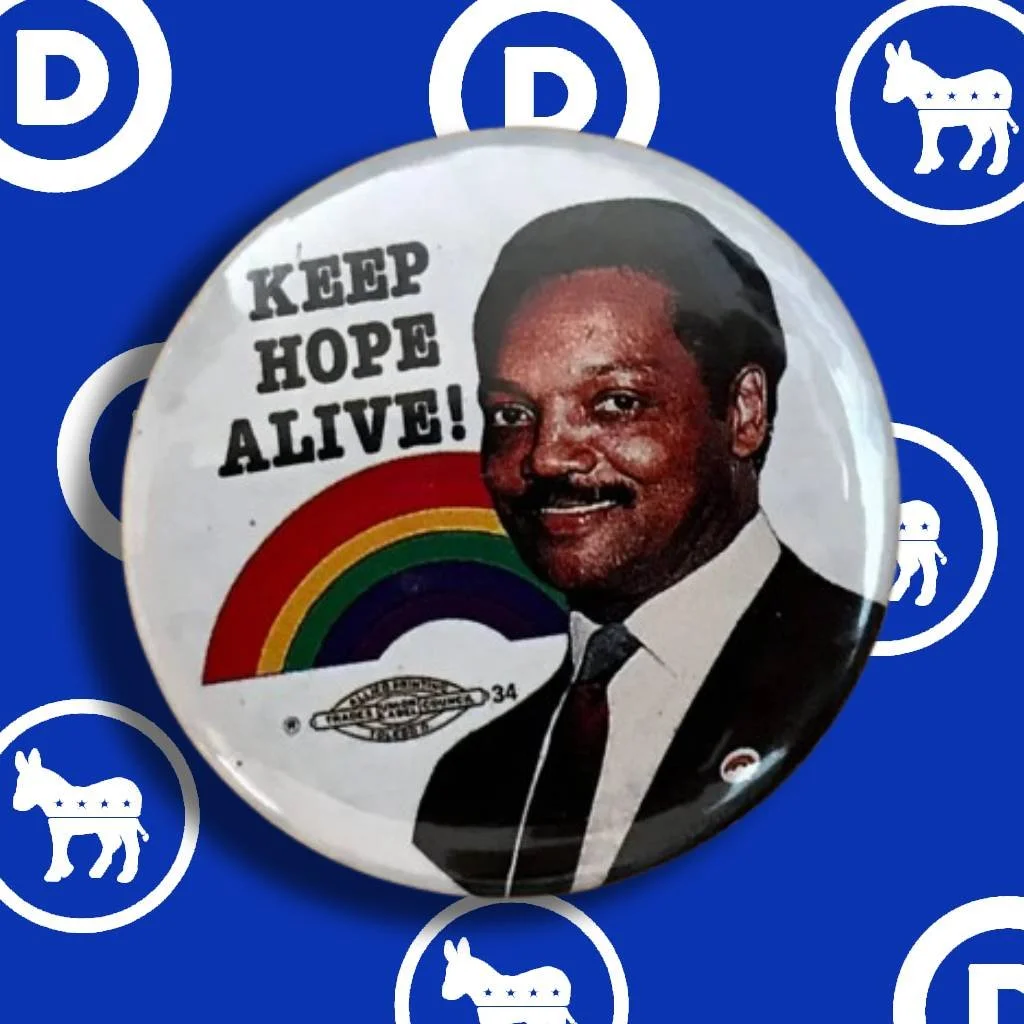
I am struggling with my feelings about Jesse Louis Jackson.
The world is telling me I should celebrate Jackson’s legacy. Jesse was a reverend—a Baptist minister to be exact. He was a civil rights pioneer. He stood next to Martin Luther King Jr. He stood up for men and women who share my skin color. He was a great father and family man. He ran for President twice. He would become the symbolic bridge connecting the King generation to the Obama generation. He recited an inspirational poem on an episode of Sesame Street.
Jesse Jackson’s mantra was “Keep Hope Alive!”
For millions of people, that is the Jesse Jackson they knew and loved. From afar, that’s not the Jesse I saw.
I was born on June 28, 1988. By then, he had already become a political figure after two unsuccessful campaigns to become the United States President. Jackson had already become a liberal activist, forming two organizations, Operation PUSH (People United to Serve Humanity) and The National Rainbow Coalition, which later merged in 1996.
The Jesse Jackson I saw continuously stoked racial divisions.
In 2013, Phil Robertson, of A&E’s Duck Dynasty fame, did an interview with GQ Magazine. When asked about what he considers to be sin, he replied, "Start with homosexual behavior and just morph out from there. Bestiality, sleeping around with this woman and that woman and that woman and those men.” He then quoted 1 Corinthians 6:9: “Don't be deceived. Neither the adulterers, the idolaters, the male prostitutes, the homosexual offenders, the greedy, the drunkards, the slanderers, the swindlers-they won't inherit the kingdom of God. Don't deceive yourself. It's not right."
Phil became one of the first high-profile casualties in the modern culture and political war between LGBTQ ideology and Christianity. A&E suspended him indefinitely. Jesse Jackson, his Rainbow/PUSH Coalition, and GLAAD (formerly known as Gay & Lesbian Alliance Against Defamation) demanded a meeting with the network and Cracker Barrel’s CEO to urge the removal of Duck Dynasty from the airwaves and of all the show’s merchandise from Cracker Barrel.
“These statements uttered by Robertson are more offensive than the bus driver in Montgomery, Alabama, more than 59 years ago,” Jackson said in a statement.
“At least the bus driver, who ordered Rosa Parks to surrender her seat to a white person, was following state law. Robertson’s statements were uttered freely and openly without cover of the law, within a context of what he seemed to believe was ‘white privilege.’”
Jackson, you know, being a minister and all, should have been able to appreciate where Robertson was coming from. Instead, he levied accusations of racism.
In 2017, he held NASCAR’s feet to the fire and demanded that they be more inclusive to blacks. Black Americans have largely never cared about NASCAR. They still don’t.
According to popular consensus, Jesse Jackson and Al Sharpton were the two premier civil rights activists of the 2000s. So I did some research on both of them. What I found was less than spectacular. What I discovered on Al Sharpton is vile and disgusting, but I will discuss that some other time. But what I saw on Jackson, although not as scandalous, was upsetting.
In the 1980s, Jesse Jackson masterminded a high-profile national boycott of Anheuser-Busch. He framed the brewer as racist for its lack of diversity. This laid the foundation for a deal he brokered in 1997, in which Anheuser-Busch sold one of its Chicago distribution franchises to an investment group led by his sons, Jonathan and Yusef.
Jackson has a long track record of shaking down corporations for personal gain and political clout. All in the name of civil rights, of course. Some say he bridged the gap between King and Obama. In reality, he bridged the gap between the Civil Rights Movement and BLM. Alicia Garza, Patrisse Cullors, and Opal Tometi, the founders of Black Lives Matter, used all of Jackson’s tactics on a larger scale. The BLM founders even bought a mansion in a 99% white county in California. All in the name of civil rights, of course.
All of this has been seared in my brain for years. But when he passed yesterday (February 17), I was reminded of this essay he wrote in 1977. It was a beautiful and eloquent piece that put Jackson in a whole new light for me.
Here are the parts that really caught my attention.
“Some of the most dangerous arguments for abortion stem from popular judgments about life's ultimate meaning, but the logical conclusion of their position is never pursued. Some people may, unconsciously, operate their lives as if pleasure is life's highest good, and pain and suffering man's greatest enemy. That position, if followed to its logical conclusion, means that that which prohibits pleasure should be done away with by whatever means are necessary. By the same rationale, whatever means are necessary should be used to prevent suffering and pain. My position is not to negate pleasure nor elevate suffering, but merely to argue against their being elevated to an ultimate end of life. Because if they are so elevated, anything, including murder and genocide, can be carried out in their name.”
“Politicians argue for abortion largely because they do not want to spend the necessary money to feed, clothe and educate more people. Here, arguments for inconvenience and economic savings take precedence over arguments for human value and human life. I read recently where a politician from New York was justifying abortion because they had prevented 10,000 welfare babies from being born and saved the state $15 million. In my mind, serious moral questions arise when politicians are willing to pay welfare mothers between $300 to $1000 to have an abortion, but will not pay $30 for a hot school lunch program to the already born children of these same mothers.”
The politician Jackson was referring to was likely Manfred Ohrenstein or Franz Leichter. Both Democrats.
My eyes widened with joy when I read this. This is something I have written about for years. Then, my head tilted in confusion. Where did this Jesse Jackson go? How come I never saw or heard about this version, this Christian version, of Jesse Jackson? How could this man father a child out of wedlock through an extramarital affair?
This version of Jesse Jackson succumbed to the allure of political power and filthy lucre. Just look at the 10-year period after he wrote this. He became a multi-millionaire, a Democrat Party power broker, and a national household name.
That transformation is hard to ignore.
This is ultimately where I land with Jackson. He was a well-meaning man who tried to lead people the best way he could. Unfortunately, the demons attached to money, fame, and power got the best of him.
That is an indictment on all of us, including myself.
Scripture does not merely warn celebrities, politicians, and ministers. It warns all men. Not liberal men, not conservative men. All men. Mark 8:36-37: “For what will it profit a man if he gains the whole world, and loses his own soul? Or what will a man give in exchange for his soul?” Did Jesse trade his soul trying to gain the whole world? I don’t know. And honestly, it’s not my place to hand down that verdict. That’s above my pay grade.
What made my jaw drop when reading his 1977 essay is that he understood morality. He understood that life is a gift from God. He knew that a life that succumbs to pleasure and convenience would explain away all sorts of evil. He was a man of pristine moral clarity. Yet, somewhere along the way, someone or something clouded his morality.
Instead of confronting sin straight across the board, he seemed to pick his targets. The sins of Democrats were justified as long as Republicans were punished for their sins. The sins of black people were ignored while he politicized the sins of white people.
I do not deny that Jesse Jackson did some good. He marched. He organized. He opened doors. He inspired plenty of Americans, black and white, who felt invisible. But the same man who wrote passionately about the sanctity of life would later stand shoulder to shoulder with politicians who defended abortion. The same man who stood in the pulpit and preached the message of Christianity demonized people who did not share the same skin color as him.
I cannot reconcile those two versions of him. I can’t do it, I won’t do it. So I choose honesty. I will not vilify or canonize him posthumously. De mortuis nil nisi bonum. Jesse Jackson was not a saint or a devil. He was a sinful man, just like me.
Perhaps that’s what I’m struggling with. I see the same capacity in myself. To speak truth boldly one year and soften it the next. To do something courageous—and then justify something cowardly. To believe deeply, and then compromise quietly. It’s uncomfortable to admit.
While we reflect on Jesse Jackson’s life and influence, we should remember that his mantra was incomplete. “Keep Hope Alive,” he would say. Hope in what? Hope in policy? Hope in influence? Hope in power? Hope in money? That kind of hope burns hot...like Hell.
If we’re going to keep hope alive, it has to be rooted somewhere sturdier than partisan politics.
We should say, “Keep Hope Alive In Christ!”
Hopefully, Jesse Jackson came to that realization on the other side.
Written by Vincent Williams
He is a former Music Director at Windy City Underground radio, on-air talent at Logik Radio, as well as board operator, sound engineer and videographer. Writing has always been an integral part of Vincent's life. He is a life-long Chicagoland resident, a pro wrestling fan, a zodiac Cancer and lover of anything mint flavored.
Recent Posts





There’s this weird expectation these days that if you are fortunate to make money doing something creative, you have to speak about it like it is a sacred heirloom. The writer can’t simply write. The painter can’t simply paint. The musician cannot simply make music. You apparently have to speak about it like it is a piece of your soul.
For some people, it is. For others, it’s just something they happen to be good at.
Vince Staples has a healthier view of work than many of the people criticizing him.