
Druski's Critique of the Church Didn't Go Far Enough
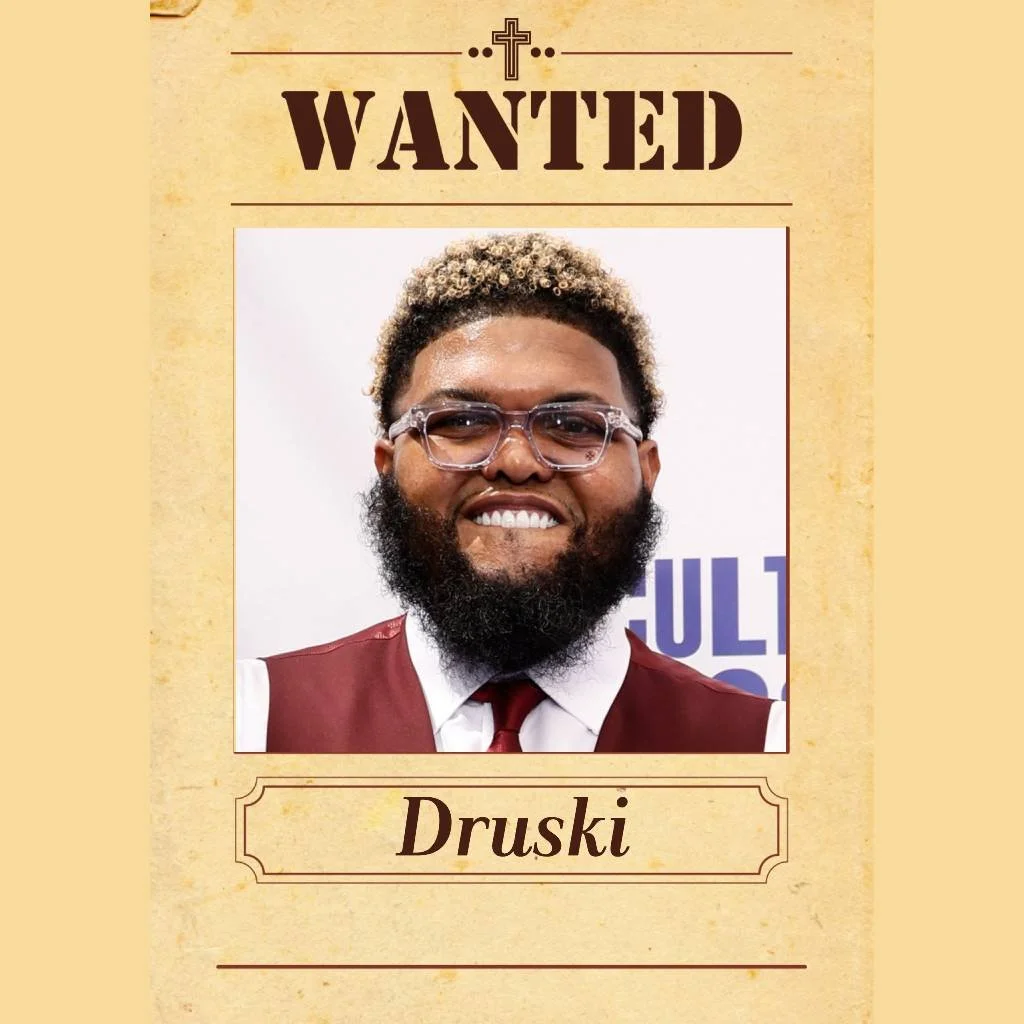
Preachers and comedians are from the same family tree. They stand on different stages and speak to different crowds, but they are both professional truth-tellers. One leans on Scripture, the other leans on humor, but when they are honest, both can make people uncomfortable. Truth is stubborn. It tends to do that.
A serious preacher, like the late Voddie Baucham, doesn’t tickle your ear by cherry-picking the Instagram-friendly parts of the Bible. He exposes sin head-on with conviction. A good comedian, like Katt Williams, exposes and mocks foolishness. Katt exposed a lot of foolishness from the Club Shay Shay couch last year. Preaching and comedy, when done correctly, will open hearts and minds to truths we are otherwise too stubborn to realize on our own.
That explains why people get offended. Truth does not care about people’s feelings. God’s Word does not care about niceties and empty platitudes. It simply is. You get offended, that’s a “you” problem. It probably means you have some soul-searching to do.
Which brings us to Druski.
Born Drew Desbordes, the 31-year-old Maryland native has cleverly and creatively injected himself into the bloodstream of modern pop culture. His comedic skits have made him famous...and infamous. He is everywhere: red carpets, movie premieres, fashion shows, Saturday Night Live, Good Morning America, throwing out first pitches at baseball games, trending on social media every other week. His social media stardom is in the same stratosphere as Elon Musk, Donald Trump, and a woman who can’t decide who she wants to blame for Charlie Kirk’s murder. He has become unavoidable, which gives his work real cultural weight.
Druski often works from shallow assumptions. His racial caricatures reveal more about his own blind spots than the people he mocks. His Whiteface skit is born from his one-dimensional views of white Southerners, but it peeled off another layer from the onion of race conversations. The same can be said of his skit featuring a white guy accepted in “the hood.” It shines a light on the silliness and immaturity of gang culture. His content is often wildly ignorant and intellectually shallow, but mildly entertaining. It often spreads like a California wildfire because it’s offensive.
His most recent offering, spoofing mega church pastors, was just that. Offensive, in a good way.
Mega Church Pastors LOVE Money 😂😭 pic.twitter.com/oku5IQE01N
— DRUSKI (@druski) January 13, 2026
Druski’s main target was Mike Todd. He even wears the exact same suit Mike wore. Todd is a charlatan whose ministry is built on Hip-Hop hustle culture. Just like all charlatans, they need to be called out and ridiculed.
The outrage was very predictable. Some Christians clutched their pearls. Some found the skit honest and accurate. Some used the opportunity to keep dunking on the church. Some were probably offended, but to try to score some social media brownie points, they pretended to like it. Me? I didn’t think it went far enough.
Druski’s critique stopped at the pulpit. He should have kept going. The pews deserve some attention, too.
I’m reminded of one of the most blistering sermons in the Bible. In Matthew 23 (NKJV), Jesus repeatedly cries, “Woe to you, scribes and Pharisees, hypocrites!” He was not calling out the everyday sinner, or the prostitute, or the tax collector. Jesus was calling out church folks. The ones who looked holy, but didn’t have an ounce of humility in them.
One of the most common critiques I hear from non-churchgoers is that churchgoers are pretentious and arrogant. They think they are better than everyone else. I used to think that was the secular world trying to attack the church. Now that I’m going to church consistently, I’ve realized that their critiques were accurate. Churchgoers can be very mean people. Spectacularly mean. Olympic-level mean. Gold-medal passive-aggressive. There are plenty of beautiful souls in there as well, but the bad ones are making others twice as much a son of hell as themselves.
It’s not just pastors who show off their wealth. In churches I’ve attended, I’ve seen Bentleys, Range Rovers, flashy watches, mink coats, neon-colored suits, and diamond-studded ties. It turns a place of worship into a BET Awards show. How does any of this help people get closer to God?
This is where public critique earns its keep.
Critique has an ugly reputation in today’s world. It’s well-deserved at times. Social commentary does have an ugly side when it’s not grounded in wisdom and grace. But public critique has always played a role in moral correction. Social stigma was the engine of anti-smoking campaigns decades ago. Public ridicule helped keep homosexuality at bay pre-Stonewall. The prophet Haggai ridiculed the Israelites for building their own houses while the temple lay in shambles.
As of this writing, Druski’s skit has eclipsed 90 million views on X and tens of millions more on other platforms. It worked. It worked because it told the truth. If it didn’t, no one would care to watch. Keep in mind, the video did not mock the Christian faith. It mocked those who abuse it.
Pastors are not the only problem. Church members who support bad leadership share the blame. People who honor Christ with their mouths, but their hearts are far from him. People who dress to be noticed instead of coming to repent. People who treat church like a private country club.
Druski did his job. It’s time for Christians to do ours. Until someone has the courage to call out both the charlatans in the pulpit and the hypocrites in the pews, the critique will remain incomplete. The mirror needs to be turned on everyone in the sanctuary, not just the man behind the microphone.
Recent Posts





There’s this weird expectation these days that if you are fortunate to make money doing something creative, you have to speak about it like it is a sacred heirloom. The writer can’t simply write. The painter can’t simply paint. The musician cannot simply make music. You apparently have to speak about it like it is a piece of your soul.
For some people, it is. For others, it’s just something they happen to be good at.
Vince Staples has a healthier view of work than many of the people criticizing him.